
发布时间:
来源: South
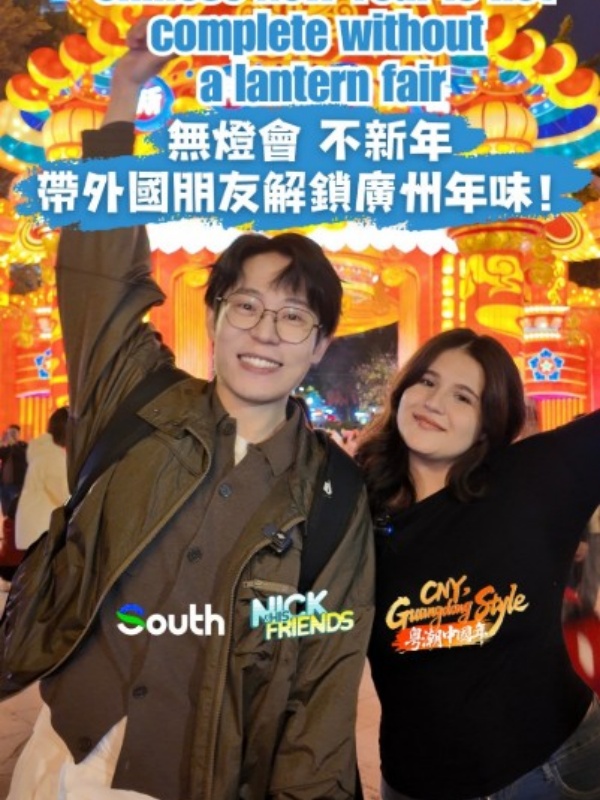
Chinese New Year is not complete without a lantern fair
When people think of the Chinese New Year, they imagine fireworks, family dinners, and red envelopes. In fact, the celebration is not complete without one more tradition: visiting a lantern fair.
This year, I brought my Turkish friend Haiyue to the 2026 Guangzhou Spring Lantern Fair, held at Yuexiu Park. What we found wasn't just a light show but a living, breathing expression of Cantonese culture.
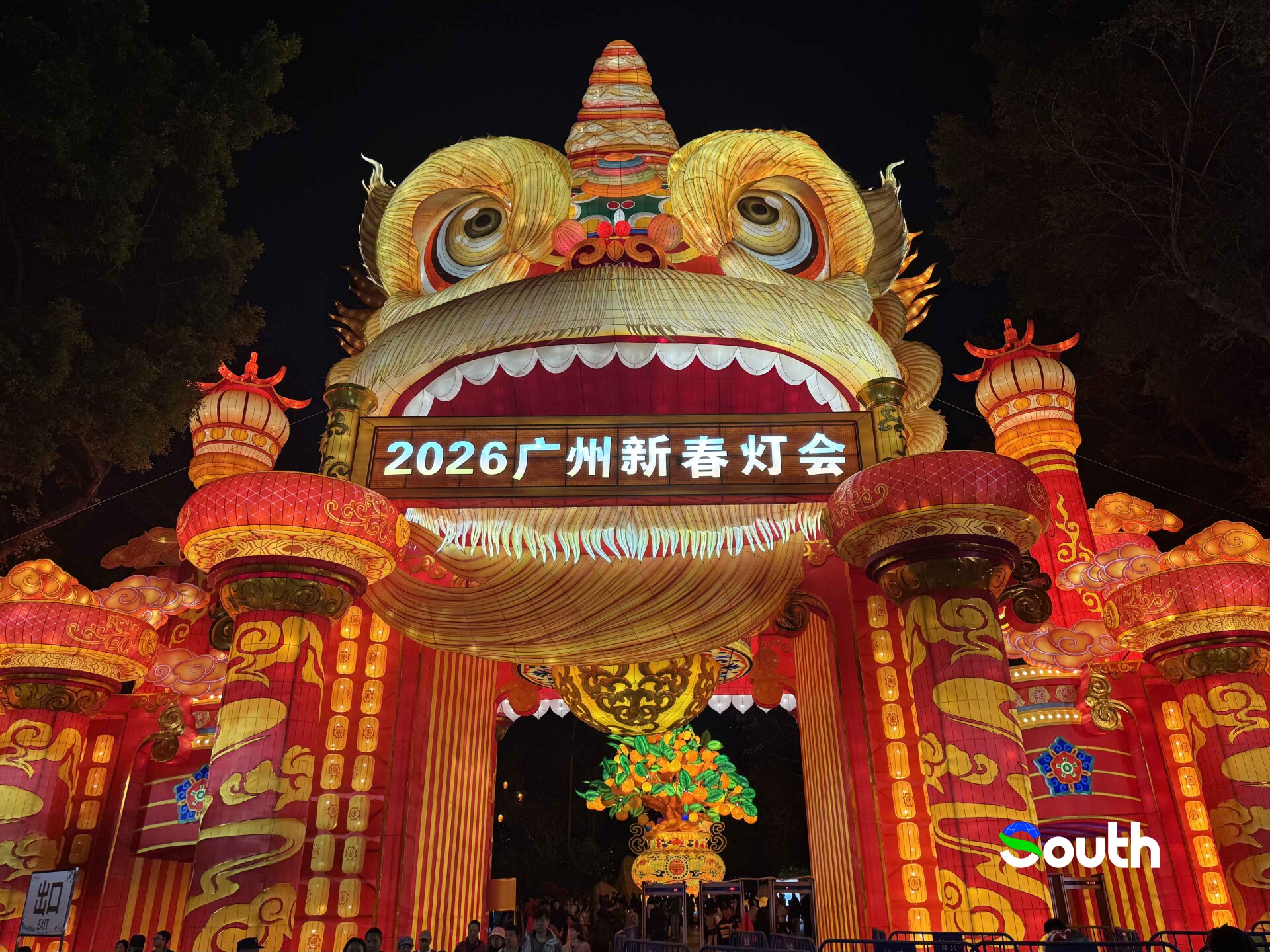
The first thing that stops you at the entrance is a 20-meter-tall lion lantern towering above the crowd. In Lingnan culture, the lion is more than a festive symbol; it represents good luck, protection, and new beginnings. Traditionally, lion dances are performed during the Spring Festival to drive away bad spirits and invite prosperity.
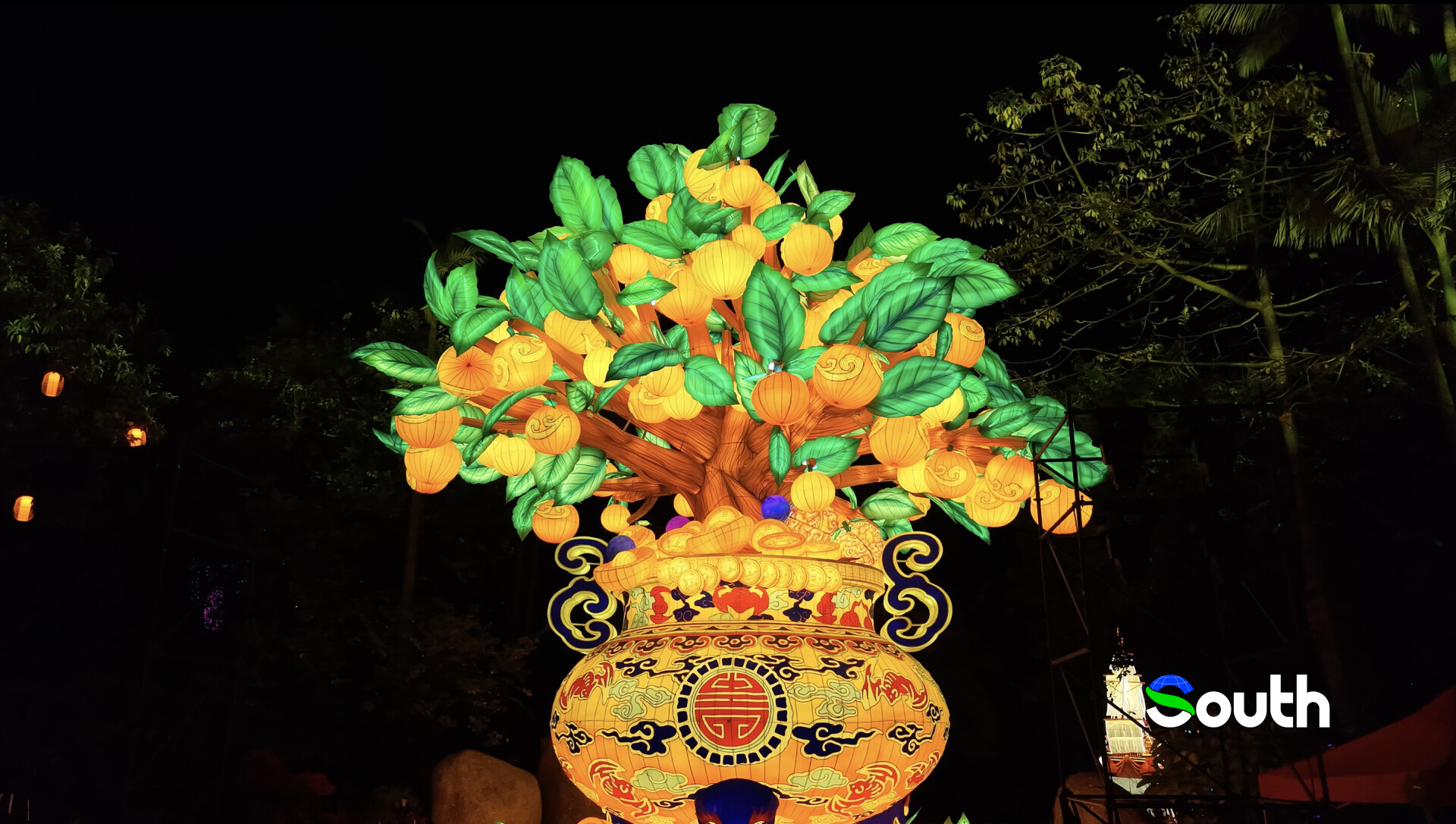
In Guangzhou, buying flowers before New Year is not optional—it's ritual. Locals call it "walking the flower street" (行花街). One lantern installation titled "Good Luck & Prosperity" draws inspiration from this tradition. At its center are kumquat trees—small orange fruits whose name in Cantonese sounds like "good fortune." Kumquats symbolize wealth and blessings, and almost every local household places one at home during the New Year.
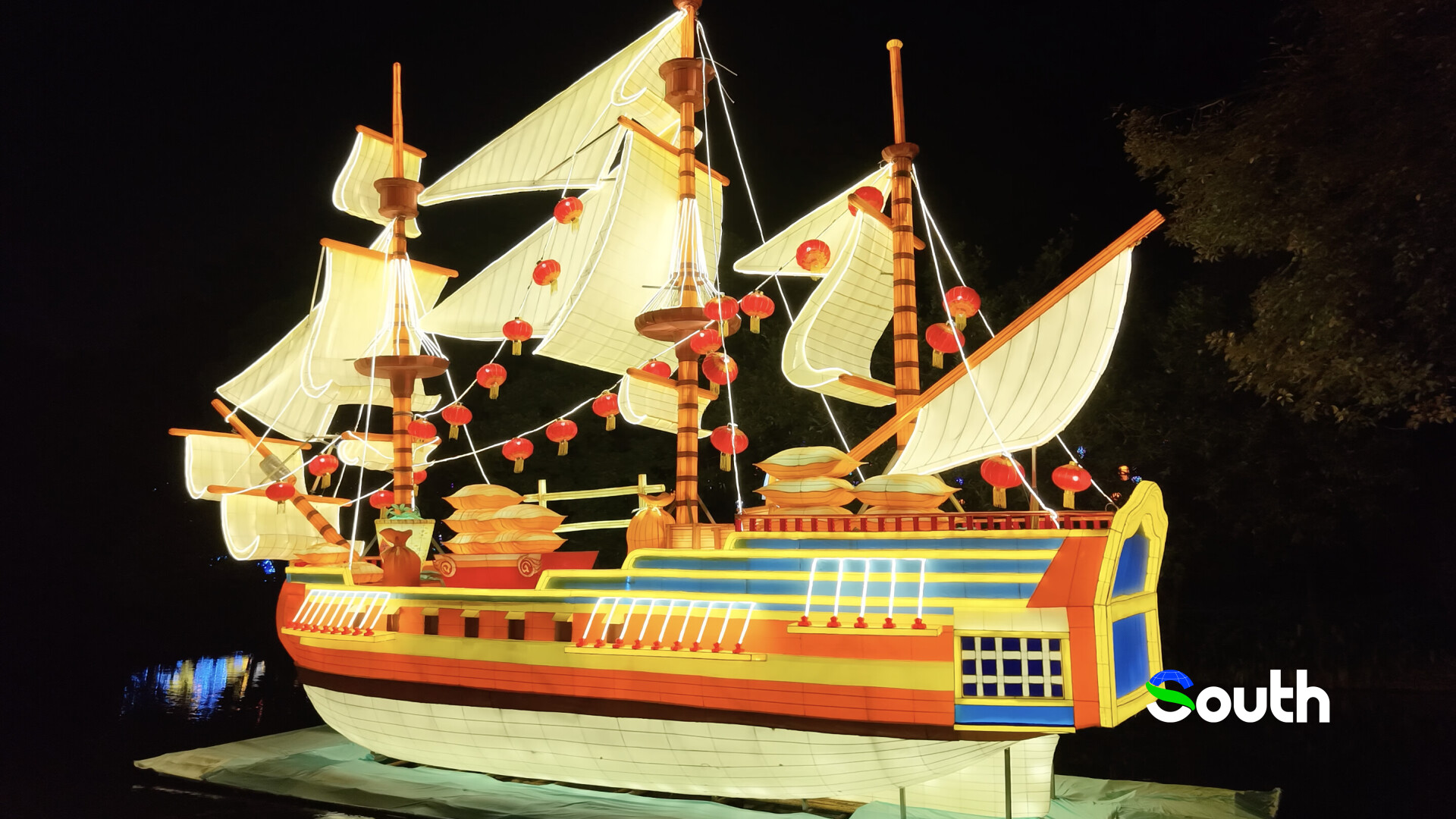
One section of the lantern fair recreates ancient port scenes, reminding visitors that Guangzhou has been a global city for over a millennium. As the starting point of the Maritime Silk Road, Guangzhou connected China to Southeast Asia, the Middle East, and Europe. Spices, silk, ceramics, and ideas flowed through this port.
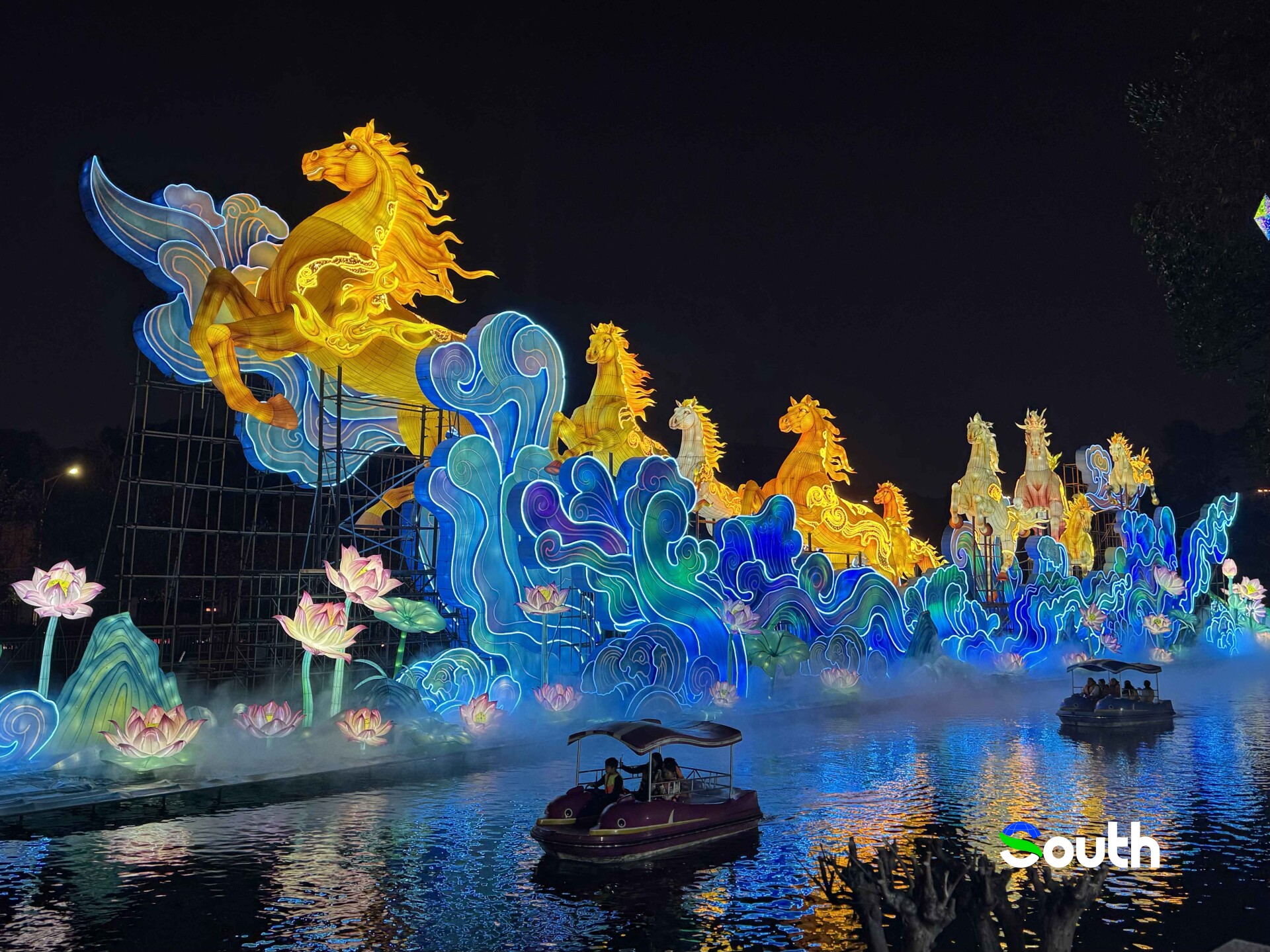
One of the largest installations features a group of luminous running horses, frozen mid-gallop. In Chinese culture, the horse symbolizes energy, perseverance, and moving forward without fear. It is closely linked to the Chinese zodiac system, where each year corresponds to an animal carrying symbolic meaning. The dynamic motion of the horses feels powerful—almost cinematic. Under the lights, they seem to be charging into the new year, carrying hope and ambition with them.
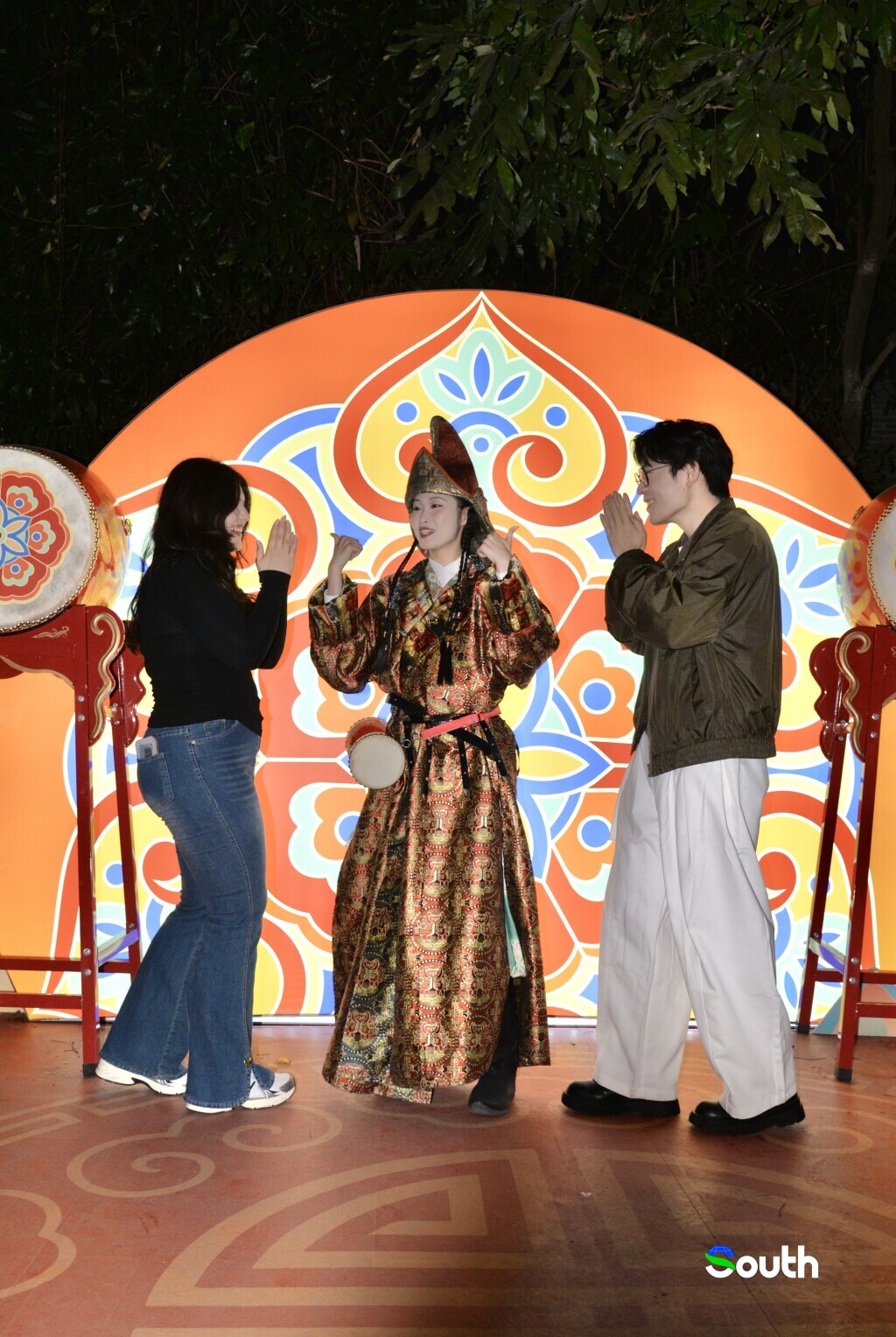
Beyond the lanterns, the park transforms into an interactive cultural space. We joined a mini "mission game" where we learned a Tang Dynasty greeting gesture, matched spices inspired by ancient trade, grabbed a blessed flower, and even tried a Tang-style dance. It was slightly awkward. We laughed. But that's the beauty of it—festivals aren't meant to be observed quietly. They are meant to be experienced.
We also walked through a street filled with New Year blessings written in Chinese:
"Become beautiful right away" (马上变美). "Pass the exam without doubts" (马上上岸). "Get rich immediately" (马上暴富). "Be happy instantly" (马上快乐).
They're playful, ambitious, and full of optimism, just like the people celebrating beneath them.
Lantern fairs date back more than a thousand years in Chinese history. They symbolize light overcoming darkness, reunion after distance, and hope at the start of spring. In Guangzhou, the lantern fair feels especially alive. Families stroll after dinner. Friends take photos. Children chase glowing shapes. History, commerce, flowers, lions, zodiac animals—everything blends into one shared urban ritual. That's why the Chinese New Year is not complete without a lantern fair. Under these lights, you don't just watch the celebration; you become part of it.
Reporter: Li Fangwang
Video: Li Fangwang
Poster: Li Fangwang
Photo: Li Fangwang