
东莞造“大力神杯”背后:中国产业链如何拿下世界杯“全场最佳”

喜提蓝白校服!中东第一网红阿波哥被深圳“硬控”了

《习近平的文化情缘》等中国纪录片在老挝启播

广东包揽全国人口增量前三城 深圳创下多个“第一”

“粤人善舟”,村村龙头异,岁岁匠心承,彰显广东各村落历史、宗族情感及文化传承

国家能源集团国华投资在希腊举办2026年企业开放日活动【组图视频】

Reviving Tradition: How a "Chinese Gift Shop" Keeps Ancient Crafts Alive in the Modern Age

发布时间:   来源: 欧洲侨报
SHANGHAI, April 20 (CNS) — "For intangible cultural heritage (ICH) to survive, it must become part of daily life." 
This is the core philosophy of Zhang Lili, Vice Dean of the Shanghai Academy of Fine Arts. After visiting the Shanghai flagship store of Natural Creations, she noted that if traditional crafts remain confined to museums, they risk extinction. To keep these skills "alive," she argues, one must find a commercial bridge—linking the rural to the urban, and craftsmanship to modern consumption.
Located in Pudong, the newly opened Natural Creations · Chinese Gift Shop is attempting to build that very bridge.
 
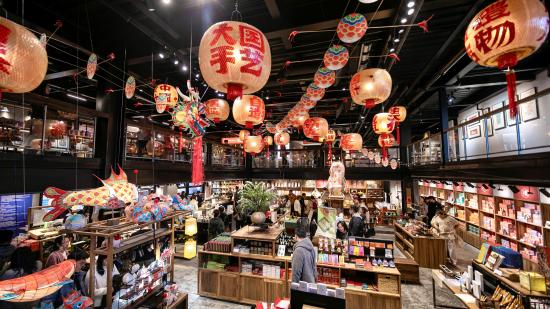
Gift Warehouse brings together leading domestic lifestyle brands to jointly develop aesthetically pleasing and practical products, providing a one-stop solution for customized corporate gifts, from concept to delivery. The image shows the interior of the first Shanghai store of "Natural Creations · China Gift Shop." (Photo courtesy of Natural Creations)
Reverse Commercial Sourcing: From Markets to Malls
In 2013, Shu Yan, the founder of Natural Creations, began a field study of local crafts, starting in an unusual place: the local farmers’ market.
"The farmers’ market is where a region’s soul resides—its flavors, its crafts, its folk operas, and its authentic way of life," Shu explained. This obsession with "locality" was initially purely personal, but it eventually sparked a movement.
The journey from a single basket of dried persimmons in a Zhejiang market to a 1,000-square-meter lifestyle space in Pudong took 13 years. Along the way, Shu faced failed experiments and "darkest moments" of being misunderstood. The turning point came with an investment from Shanghai that allowed him to bring his vision to the heart of China’s financial hub. Since its soft opening on March 3rd, the shop has become a sensation, attracting nearly 10,000 visitors and generating over 100,000 yuan in daily revenue on weekends.
Innovation: Giving Old Skills a New Purpose
"Value is created through use," Shu Yan emphasizes. He points out that blacksmiths once made sickles and hoes because there was a demand. "But in a city where young people have no farmland, who will buy a traditional plow?"
The solution lies in "Creative Transformation." At the Shanghai store, ancient techniques are reimagined as functional, modern goods:
·Blacksmithing is now applied to designer lamps and camping gear.
·Agricultural byproducts, like corn husks and bamboo shells, are turned into biodegradable packaging.
·Traditional grains are reinvented as craft rice wine and artisanal ice cream.
Zhang Lili echoes this sentiment: "Chinese culture has always been fluid, evolving with the times." She believes Natural Creations preserves the "cultural DNA" of these crafts while adapting them to contemporary urban life.
 
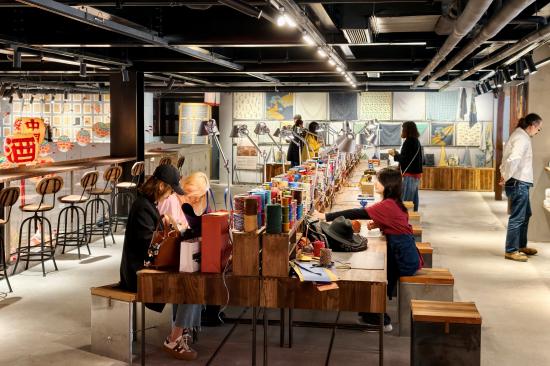
Behind Natural Creations' first Shanghai store is a collaborative network covering more than twenty provinces, cities, and counties across China—the gift packaging area offers a carefully prepared variety of packaging materials, ensuring a heartfelt gift is delivered to the most important person. (Photo courtesy of Natural Creations)
The Value Chain: Empowering Rural Artisans
Behind the sleek storefront is a vast collaborative network spanning over 20 provinces. Whether it is wool felt from Henan, yak milk products from Xizang, or bamboo weaving from Yunnan, these items are crafted by local artisans—mostly women—in their hometowns.
"Behind every display stand, there might be ten rural studios collaborating," Shu said. This model allows artisans to earn a sustainable income without needing to leave their land or families.
From a macro perspective, this aligns with the national "ICH Workshops" initiative. By connecting rural cooperatives with urban market demands and providing design training, a "virtuous cycle" is created. As Zhang Lili puts it: "The more local it is, the more international it becomes. These skills are a shared treasure of humanity, and for China, they are a vital engine for economic growth."
From Pudong to the World
When asked why he chose Pudong for his flagship store, Shu’s answer was simple: "Because of the people."
He isn't worried about "photo-hunters" who visit without buying. "If a space can keep three generations of a family engaged for hours—with grandparents explaining old tools to children while youth find beauty in the innovation—that in itself is a success," he said.
Shu’s vision for the future is even bolder: he hopes Pudong can become a "global roadshow platform" for rural China. He envisions a rotating showcase where different counties bring their music, food, and culture to the world stage. "When all 56 ethnic groups can release their products here in Pudong, the world will truly see the beauty and impact of China." BY Li Jiajia from CNS
 
上一篇:Beyond the Plate: Why Are Immersive Chinese Banquets are Captivating Global Diners?
下一篇:Why Chinese Coffee is Gaining Global Momentum

首页   |   关于我们

Copyright © http://www.eurochinesedaily.com 欧洲侨报 版权所有